Synopsis
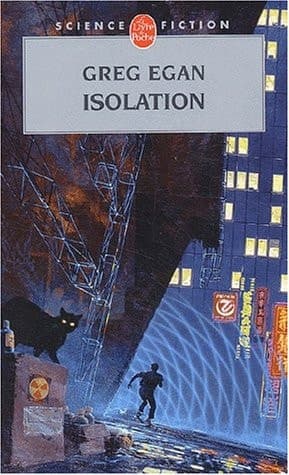
Product Description Une belle nuit, il y a trente-trois ans, les étoiles ont disparu. La Terre et avec elle l'humanité se retrouvent isolées dans une Bulle cosmique centrée sur le soleil, placées en quarantaine. Pourquoi ? Par qui ? Les hypothèses dégénèrent en cultes religieux insolites et souvent malsains. Et dans le même temps, l'humanité a appris à vivre dans les mondes virtuels. Ou bien est-ce tout l'univers qui serait devenu virtuel ? La clé du mystère serait-elle détenue par Laura Andrews, trente-trois ans, l'âge exact de la Bulle ? Mais Laura a disparu. Et les Possibles se déchaînent. Un roman quantique, éblouissant, par la grande révélation de ces dernières années, Greg Egan, écrivain australien, dont certains prétendent, puisque personne ne l'a jamais rencontré, qu'il serait un programme informatique, le premier auteur artificiel. About the Author Greg Egan est né en Australie en 1961. Considéré comme l’auteur de science-fiction le plus fascinant de sa génération, il a publié une quinzaine de romans, dont La Cité des permutants et Isolation. Nombre de ses nouvelles ont été réunies en recueils, dont Axiomatique et Radieux, qui constituent les deux premiers volets d’une intégrale raisonnée unique au monde. Son talent novateur a, entre autres, été récompensé par le prix Hugo et le Prix de l’Imaginaire pour Océanique.
Recommendations
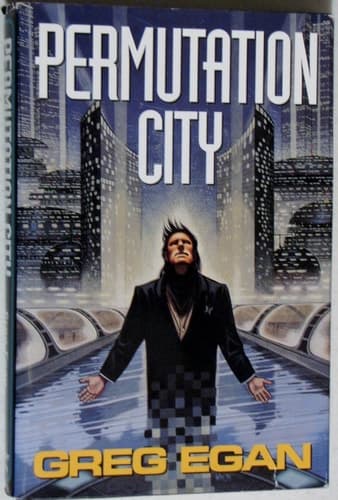
Permutation City
by Greg Egan
I know—same author—but hear me out. If *Isolation* left you hungry for Egan's particular brand of reality-bending, this earlier novel (1994) tackles virtual consciousness and the nature of existence with even more philosophical rigor. Where *Isolation* uses the Bubble as a mystery box, *Permutation City* makes the simulation itself the protagonist, and you'll find the same dizzying pleasure in following Egan's logic to its strangest conclusions.
View book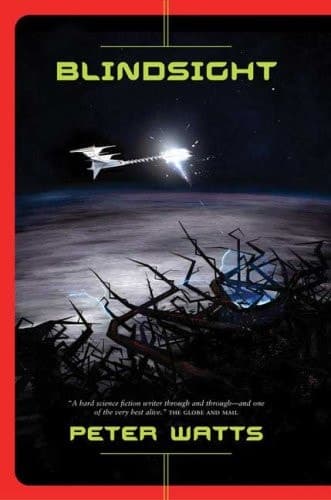
Blindsight
by Peter Watts
Watts shares Egan's obsession with consciousness as a puzzle to be solved rather than a given, and his first-contact scenario has that same vertiginous quality where humanity's assumptions about intelligence itself become the real horror. The narrative structure—told partly by an AI—mirrors how *Isolation* plays with perspective and reliability, and you'll get that same sensation of the ground shifting beneath your understanding of what's real.
View book
The Three-Body Problem
by Mauri J. Valtonen
Liu does for cosmic isolation what Egan does for virtual reality—he makes it feel simultaneously intimate and incomprehensibly vast. Like *Isolation*, this novel begins with a catastrophic cosmic event that fragments humanity's understanding of the universe, and both authors refuse to let their characters (or readers) have easy answers. The scope is different, but that same sense of humanity as small players in an indifferent cosmos runs through both.
View book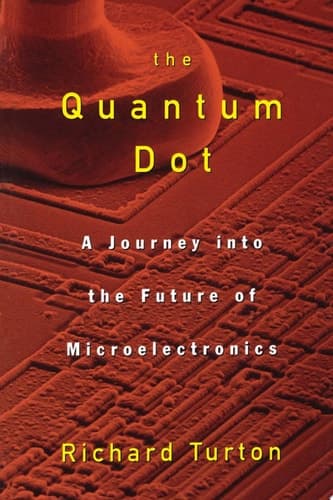
The Quantum Dot A Journey Into the Future of Microelectronics
by Richard Turton
Here's where I'm taking a slight risk: Rajaniemi writes space opera, which sounds like a departure from Egan's cerebral territory, but his approach to quantum mechanics, identity, and post-human existence is remarkably similar in its refusal to simplify. The plot moves faster than *Isolation*, but underneath there's that same obsession with how consciousness persists (or doesn't) when reality becomes negotiable—and the prose has that same crystalline precision.
View book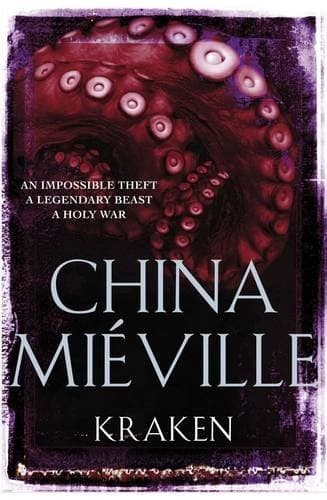
Kraken An Anatomy
by China Miéville
This is my genuine curveball recommendation—Miéville is known for weird fiction and fantasy, but *Embassytown* is pure hard SF about language, consciousness, and what happens when humanity encounters something genuinely alien. Like *Isolation*, it's structured around a central mystery that reframes everything you thought you understood, and both authors use their premises to ask uncomfortable questions about the nature of reality itself. The pacing is tighter than Egan, but the intellectual ambition is kindred.
View bookAbout Greg Egan
G
Greg Egan
Born 1961
Biography coming soon.
View author page