Synopsis
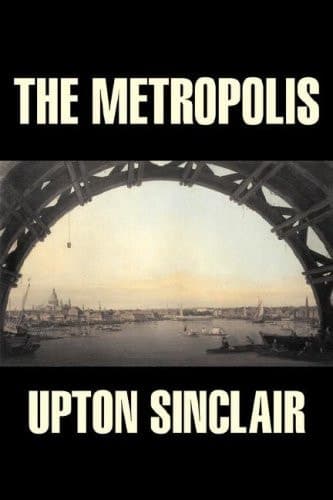
When an injustice befalls the poor, Allan is the first to fight for what is right. But as he continues his lawsuit, he begins to realize that the very people he's fighting with are the very people who rule New York. He must be wily and careful if he is to survive this pursuit of justice.
Upton Sinclair is the Pulitzer Prize winning author of Dragon's Teeth. His best known work is The Jungle, a novel about the abhorrent practices of the meat packing industry at the time.
Recommendations
Studies in the Financial Markets of the Pacific Basin
by Theodore Bos
Dreiser's protagonist Frank Cowperwood navigates the same murky intersection of law, power, and corruption that traps Allan in The Metropolis, but Dreiser takes you inside the mind of someone willing to bend every rule to climb higher. Where Sinclair shows you injustice from below, Dreiser shows you how the system corrupts from within—it's like reading the same story from two different moral vantage points.
View book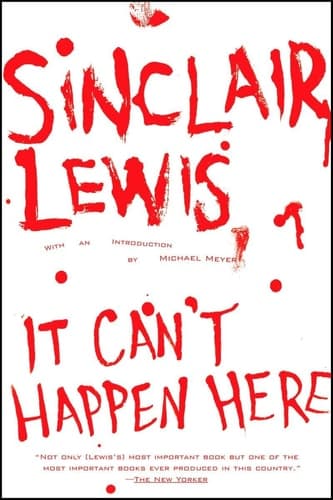
It Can't Happen Here
by Sinclair Lewis
Lewis wrote this in 1935 as a direct response to the rise of fascism, and it shares Sinclair's urgent belief that ordinary people must fight systemic corruption—but here the corruption isn't hidden in courtrooms, it's marching down Main Street in uniform. The paranoia and the sense that the rules are being rewritten in real-time will feel familiar, but the scope is far more apocalyptic than The Metropolis.
View book
The remains of the day de Kazuo Ishiguro
by Gallix/François
This is the surprise pick, but hear me out: both novels are about men who've devoted themselves to a system they gradually realize may be fundamentally unjust. Where Allan fights the system directly, Stevens has already lost by the time he understands what he's lost. Ishiguro's restrained, elegant prose creates the same creeping dread that Sinclair builds through courtroom drama—you'll recognize the same tragedy, just told in a completely different key.
View book
The Octopus A Story of California
by Frank Norris
Norris was writing naturalist fiction about corporate monopolies crushing ordinary people at almost exactly the same moment Sinclair was—this one focuses on railroad barons strangling California wheat farmers. It's got the same documentary-style exposure of how power actually works, the same sense that the legal system is just a tool the wealthy use, and the same cast of characters trying to survive in a rigged game.
View book
Ralph Ellison - Invisible Man
by Anke Balduf
Ellison's protagonist discovers that the institutions supposedly designed to help him—the legal system, political organizations, even the Communist Party—are all instruments of the same power structure that oppresses him. Like Allan, he's fighting for justice within a system that's rigged against him, but Ellison adds a layer of invisibility: the system doesn't even see him as a person worth fighting. It's The Metropolis with the stakes made even more personal and existential.
View bookAbout Upton Sinclair
U
Upton Sinclair
1878–1968
Upton Sinclair, Jr., was a Pulitzer Prize-winning American author who wrote over 90 books in many genres. He achieved popularity in the first half of the 20th century, acquiring particular fame for his 1906 muckraking novel The Jungle. It exposed conditions in the U.S. meat packing industry, causing a public uproar that contributed in part to the passage a few months later of the 1906 Pure Food and Drug Act and the Meat Inspection Act. --Wikipedia
View author page