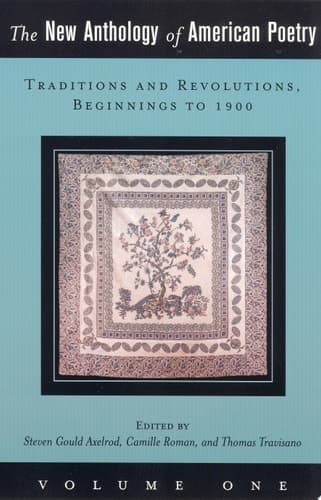
The New Anthology of American Poetry Traditions and Revolutions, Beginnings to 1900
Steven Gould AxelrodPublished2003
Pages736
Formatpaperback
PublisherRutgers University Press
Synopsis
2003 Choice Outstanding Academic Title
Volume I begins with a generous selection of Native American materials, then spans the years from the establishment of the American colonies to about 1900, a world on the brink of World War I and the modern era. Part One focuses on poetry from the very beginnings through the end of the eighteenth century. The expansion and development of a newly forged nation engendered new kinds of poetry. Part Two includes works from the early nineteenth century through the time of the Civil War. The poems in Part Three reflect the many issues affecting a nation undergoing tumultuous change: the Civil War, immigration, urbanization, industrialization, and cultural diversification.
Such well-recognized names as Anne Bradstreet, Edward Taylor, Phillis Wheatley, Edgar Allan Poe, Herman Melville, Walt Whitman, Emily Dickinson, and Stephen Crane appear in this anthology alongside such less frequently anthologized poets as George Horton, Sarah Helen Whitman, Elizabeth Oakes-Smith, Frances Harper, Rose Terry Cooke, Helen Hunt Jackson, Adah Menken, Sarah Piatt, Ina Coolbrith, Emma Lazarus, Albery Whitman, Owl Woman (Juana Manwell) Sadakichi Hartmann, Ernest Fenollosa, James Weldon Johnson, Paul Laurence Dunbar, and--virtually unknown as a poet--Abraham Lincoln. It also includes poems and songs reflecting the experiences of a variety of racial and ethnic groups.
Recommendations
The Norton Anthology of American Literature
by Nina Baym
Since you've engaged deeply with Axelrod's scholarly approach to early American poetry, Baym's Norton anthology offers a complementary perspective with more contextual apparatus and critical framing. You'll find overlapping poets like Bradstreet and Wheatley, but Baym's editorial choices and headnotes will deepen your understanding of how these voices fit into broader literary conversations—it's like having a knowledgeable colleague point out connections you might have missed on your first read.
View book
Ralph Ellison - Invisible Man
by Anke Balduf
This is my surprise pick for you, but hear me out: Ellison's prose is fundamentally poetic in its construction, layering symbolism and linguistic play the way Dunbar and James Weldon Johnson did in verse. The novel's exploration of African American identity and invisibility in American culture extends the conversation those poets in your anthology were having—but through a different medium that lets you experience how those themes evolved in the mid-20th century.
View book
Walt Whitman's Leaves of Grass
by Walt Whitman
I know Whitman appears in your anthology, but the complete collection is a different beast entirely—it's Whitman's full vision across multiple editions, showing how he revised and expanded his democratic vision of American poetry over decades. Reading the selections in Axelrod's context and then diving into the full text is like seeing a sketch become a mural; you'll understand why he was so revolutionary and why later poets in the anthology were either building on or reacting against his innovations.
View book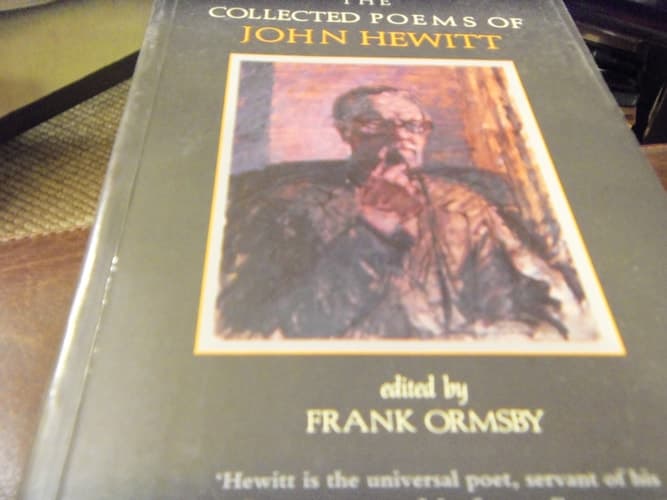
The Collected Poems of John Hewitt
by John Harold Hewitt
Similar to Whitman, Dickinson deserves the full immersion after encountering her in the anthology. The complete collection reveals her astonishing range and the radical compression of her style—you'll see how those dashes and slant rhymes weren't quirks but deliberate techniques that influenced everything that came after. It's a chance to sit with one major voice long enough to understand her architecture.
View book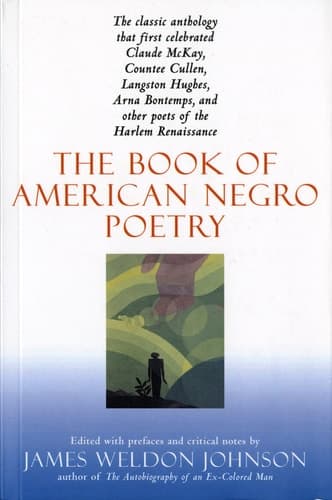
The Book of American Negro Poetry
by James Weldon Johnson
Johnson appears in your anthology as a poet, but his role as editor and curator of this 1922 collection is equally important—he was doing what Axelrod does now, arguing for the legitimacy and sophistication of African American verse at a moment when the literary establishment largely ignored it. Reading his introduction and selections gives you insight into how poets themselves have shaped the American canon, and you'll encounter voices like Claude McKay and Langston Hughes at a crucial moment in their development.
View bookAbout Steven Gould Axelrod
S
Steven Gould Axelrod
Born 1944
Biography coming soon.
View author page