Synopsis
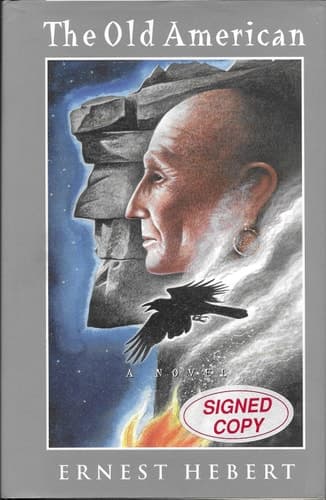
In 1746, Nathan Blake, the first frame house builder in Keene, New Hampshire, was abducted by Algonkians and held in Canada as a slave. Inspired by this dramatic slice of history, novelist Ernest Hebert has written a masterful new novel recreating those years of captivity.
Set in New England and Canada during the French and Indian Wars, The Old American is driven by its complex, vividly imagined title character, Caucus-Meteor. By turns shrewd and embittered, ambitious and despairing, inspired and tormented, he is the self-styled "king" of the remnants of the first native tribes that encountered the English. Displaced and ravaged by disease, these refugees have been forced to bargain for land in Canada on which to live. Having hired himself out as interpreter to a raiding party of French and Iroquois, Caucus-Meteor returns from New Hampshire the unexpected possessor of a captive, Nathan Blake.
He decides to bring the Englishman to his own village rather than sell him to the French. Ambivalent about his former life, Blake gradually fits into the routine of Conissadawaga. Meanwhile, Caucus-Meteor struggles to protect his people from the rapacious French governor. Constantly plotting and maneuvering, burdened by responsibility, the Old American exhibits cunning and courage. A gifted linguist who was forbidden to learn to read or write; a former slave who is now a king; a native leader who has seen more of London and Paris than his English captive, who knows more of European politics than the French colonial administrators, Caucus-Meteor is a brilliant, cantankerous, visionary figure whom readers will long remember.
Recommendations

El nombre de la rosa / The Name of the Rose
by Umberto Eco
Like Hebert, Eco constructs a richly detailed historical world where language, power, and cultural collision drive the narrative. Both novels feature protagonists navigating between worlds—Blake between English and Algonkian cultures, while Eco's monk-detective moves between the intellectual and physical realms of a medieval monastery. The intellectual complexity and layered meanings reward the kind of careful attention you clearly enjoyed in The Old American.
View book
Toni Morrison - Beloved
by Carl Plasa
Morrison, like Hebert, centers a narrative on someone displaced by captivity and forced to navigate between two worlds, exploring what it means to reclaim agency and identity. Her prose has that same unflinching quality—she doesn't sentimentalize suffering but examines how people survive and resist within impossible circumstances. The emotional weight of Blake's gradual integration into Conissadawaga finds a profound echo here.
View book
The Apocalyptic Vision of Mikhail Bulgakov's the Master and Margarita (Studies in Slavic Language & Literature)
by Edward E. Ericson
This might seem like a departure, but stay with me: both novels feature a protagonist of mysterious origins navigating a world where political power and personal survival constantly intersect, where language and wit become tools of survival. Bulgakov's satirical edge and Hebert's sharp characterization of Caucus-Meteor share a darkly comic sensibility about ambitious men trying to outmaneuver forces larger than themselves. It's a 1960s Russian novel, so it'll stretch you in a different direction while hitting similar emotional notes.
View book
Fried Green Tomatoes at the Whistle Stop Cafe
by Fannie Flagg
This one's a genuine surprise recommendation, but Flagg does something Hebert does beautifully: she tells a story of cultural outsiders and displaced people finding community and agency through unexpected relationships. Where The Old American shows us Caucus-Meteor's shrewd navigation of colonial politics, Flagg shows us how ordinary people—particularly women and marginalized figures—build power through connection and storytelling. Both novels are deeply rooted in specific American places and histories that shaped those places.
View bookAbout Ernest Hebert
Biography coming soon.
View author page