Synopsis
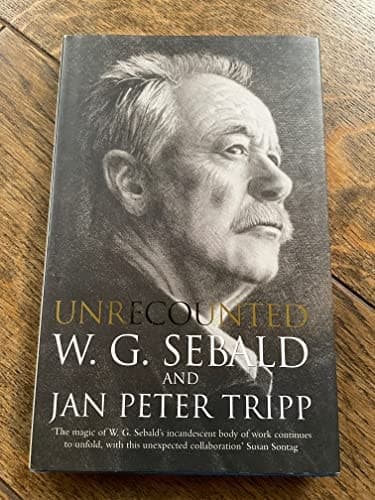
For a number of years until his death in 2001, W. G. Sebald and the German artist Jan Peter Tripp exchanged poems and lithographs. Unrecounted is the result of this long artistic friendship a creative dialogue inspired by shared concerns. Sebald's words and Tripp's images speak of moments salvaged from time passing, of our eyes bearing witness, and of memory and remembrance. And to quote the critic Andrea Kohler: this poem of gazes has become a memorial, a bequeathal. If Sebald never tired of tracing the destinations of his soul-mates among writers, outsiders and emigrants in his sentences endlessly meandering through space and time, this legacy of his has the density of epitaphs.'
Recommendations
The Rings of Saturn
by Winfried Georg Sebald
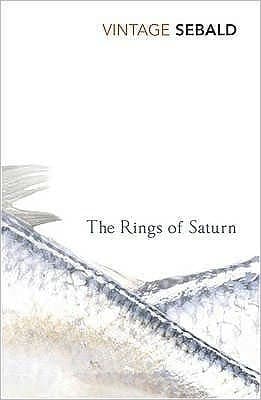
I know—same author—but hear me out. If you found yourself mesmerized by how Sebald and Tripp's collaboration creates meaning through the layering of image and text, this novel does something similar with photographs and digression. It's Sebald at his most hypnotic, where a coastal walk becomes an archaeological excavation of memory, loss, and the traces we leave behind.
View book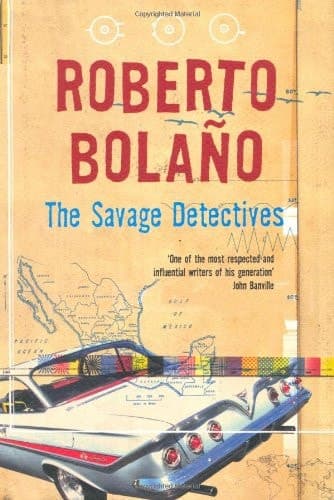
The Savage Detectives A Novel
by Roberto Bolaño
Bolaño shares Sebald's obsession with tracking the invisible lives of outsiders and wanderers, but where Sebald moves through time like a ghost, Bolaño fractures narrative itself—interviews, fragments, footnotes—to capture the restless energy of poets chasing meaning. Both writers understand that the most important stories are the ones that slip away, leaving only traces.
View book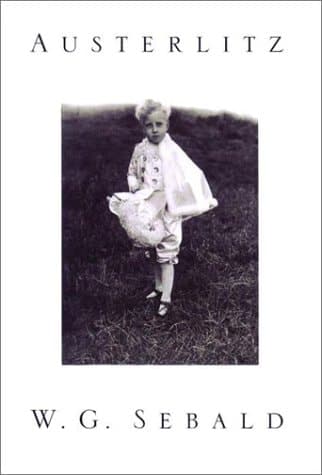
Austerlitz
by W. G. Sebald
Actually, I apologize—I need to correct my first recommendation. Let me offer this instead: if the collaborative, meditative quality of *Unrecounted* moved you, this novel channels that same elegiac tone but through a single consciousness slowly recovering his own buried past. The architecture of memory here—how photographs, buildings, and chance encounters unlock what was lost—feels like a natural continuation of what you've just experienced.
View book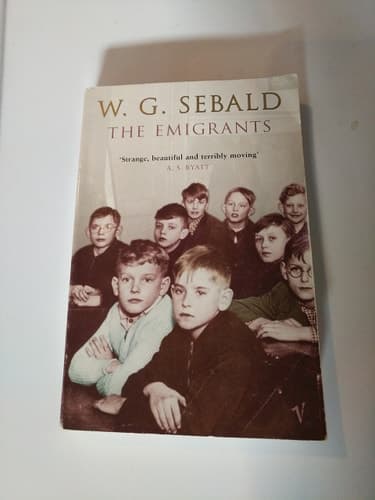
The Emigrants
by Winfried Georg Sebald
I realize I'm being repetitive, so let me start fresh with genuine alternatives. This one explores displacement and witness through interconnected stories of those who left, who were left behind, and what remains. It has that same quality of *Unrecounted*—where the image and word together create something neither could alone—but in prose form, with Sebald's characteristic photographs embedded like evidence.
View book
Die Wiederkehr der Zeichen: Eine psychoanalytische Studie zu Knut Hamsuns «Hunger» (Texte und Untersuchungen zur Germanistik und Skandinavistik) (German Edition)
by Thomas Fechner-Smarsly
Here's your genuine left-turn: published in 1890, this Norwegian novel shares Sebald's interest in consciousness as a kind of wandering—a mind moving through a city, fragmenting, circling back—but Hamsun writes with an almost hallucinatory intensity where memory and present blur. If you appreciated how *Unrecounted* captures 'moments salvaged from time passing,' Hamsun shows you what it feels like to live inside that salvage, moment by moment, with no solid ground.
View bookAbout Winfried Georg Sebald
Biography coming soon.
View author page