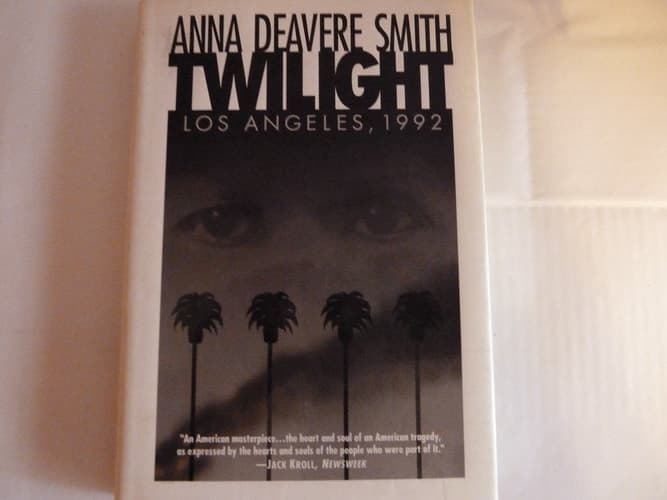
Synopsis
Twilight is Anna Deavere Smith's stunning new work of "documentary theater" in which she uses the verbatim words of people who experienced the Los Angeles riots to expose and explore the devastating human impact of that event.
From nine months of interviews with more than two hundred people, Smith has chosen the voices that best reflect the diversity and tension of a city in turmoil: a disabled Korean man, a white male Hollywood talent agent, a Panamanian immigrant mother, a teenage black gang member, a macho Mexican-American artist, Rodney King's aunt, beaten truck driver Reginald Denny, former Los Angeles police chief Daryl Gates, and other witnesses, participants, and victims.
A work that goes directly to the heart of the issues of race and class, Twilight ruthlessly probes the language and the lives of its subjects, offering stark insight into the complex and pressing social, economic, and political issues that fueled the flames in the wake of the Rodney King verdict.
Combining Smith's introduction exploring Twilight's evolution from the streets to the stage, the complete play script, and photos of the author in character, Twilight is a captivating work of dramatic literature - and a unique first-person portrait of a pivotal moment in current history.
Recommendations
The Crucible, Arthur Miller Notes
by David Langston
Miller's play operates exactly like Smith's documentary theater—using historical testimony and dialogue to interrogate a moment of social hysteria and expose how fear weaponizes language and accusation. Both works understand that the *words* people use reveal the ideological fault lines beneath a crisis, and both refuse to let audiences sit comfortably with simple villains or heroes.
View book
James Baldwin : Collected Essays : Notes of a Native Son / Nobody Knows My Name / The Fire Next Time / No Name in the Street / The Devil Finds Work / Other Essays (Library of America)
by James Baldwin
Baldwin's essays do what Smith does on stage—they let you hear the actual cadence and texture of how people think and speak about race in America, moving between intimate confession and sweeping cultural analysis. Where Smith gives you the voices of 200 people in Los Angeles, Baldwin gives you the interior monologue of someone wrestling with the same systems of violence and invisibility, but from the inside.
View book
Securing the Commonwealth Debt, Speculation, and Writing in the Making of Early America
by Jennifer J. Baker
This is the surprise pick—it's a fragmented, almost poetic novel rather than journalism or drama, but it shares Smith's obsession with how people actually *speak* and think in moments of crisis and ordinary desperation. Offill builds a portrait of a life (and a marriage, and motherhood, and ambition) through overheard conversations, internal monologues, and the gaps between what's said and what's meant—the same technique Smith uses to expose class and racial tensions.
View book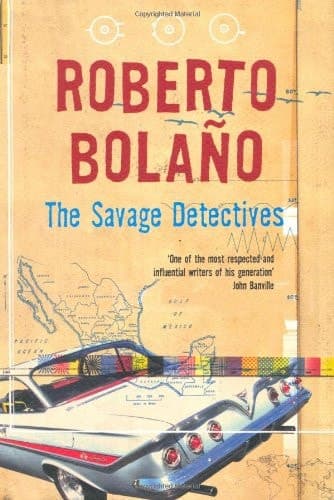
The Savage Detectives A Novel
by Roberto Bolaño
Bolaño's sprawling novel is built almost entirely from interviews, testimonies, and overlapping voices—hundreds of them—all circling around two poets and a mystery that may or may not be solvable. Like Smith, Bolaño trusts that the *accumulation* of different perspectives and speech patterns will reveal something true about a culture and a moment, even (or especially) when those voices contradict each other.
View book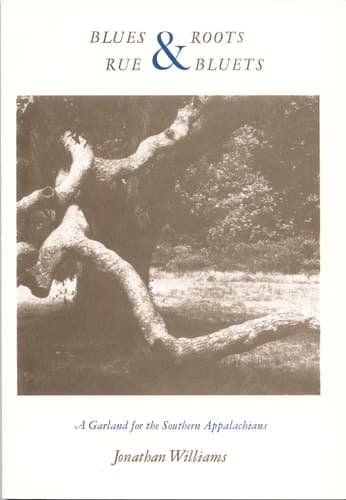
Blues and Roots/Rue and Bluets A Garland for the Southern Appalachians
by Jonathan Williams
Nelson's hybrid essay-poem-meditation uses fragments, quotations, and personal testimony to investigate color, longing, and loss—and like Smith, she's interested in how language *fails* to capture what we actually experience. Both works refuse neat conclusions and instead offer something more honest: the messy, contradictory reality of how people actually live through and speak about their pain.
View bookAbout Anna Deavere Smith
Biography coming soon.
View author page